What Is Artificial Intelligence, Really? An Introduction Without Jargon
Whether you open a newspaper or turn on the TV, you can't escape the term “AI” (Artificial Intelligence) — or “KI” as it's known in German (Künstliche Intelligenz).
The media often paints pictures of robots that think like humans or even seek to replace us. But if we pull back the curtain of science fiction, what remains is a technology that is fascinating but far less “mysterious” than many believe.
In most cases, an AI is nothing more than an extremely fast-learning computer program. While conventional programs follow rigid “if this happens, then do that” rules, an AI works more like a human apprentice. You don't give it fixed instructions — instead, you feed it enormous amounts of examples: texts, photos, music. The AI examines these mountains of data and begins to recognise patterns.
Imagine showing a child thousands of pictures of apples. Eventually the child grasps the concept of “apple” without you having to explain the biological definition. That's exactly how AI works. When you chat with an AI like ChatGPTtoday, the machine doesn't “understand” your question in the human sense. Instead, it calculates at lightning speed which answer is most likely and most useful, based on its experience. It's a form of digital intuition built on gigantic amounts of data.
Why Are We Experiencing This Upheaval Right Now?
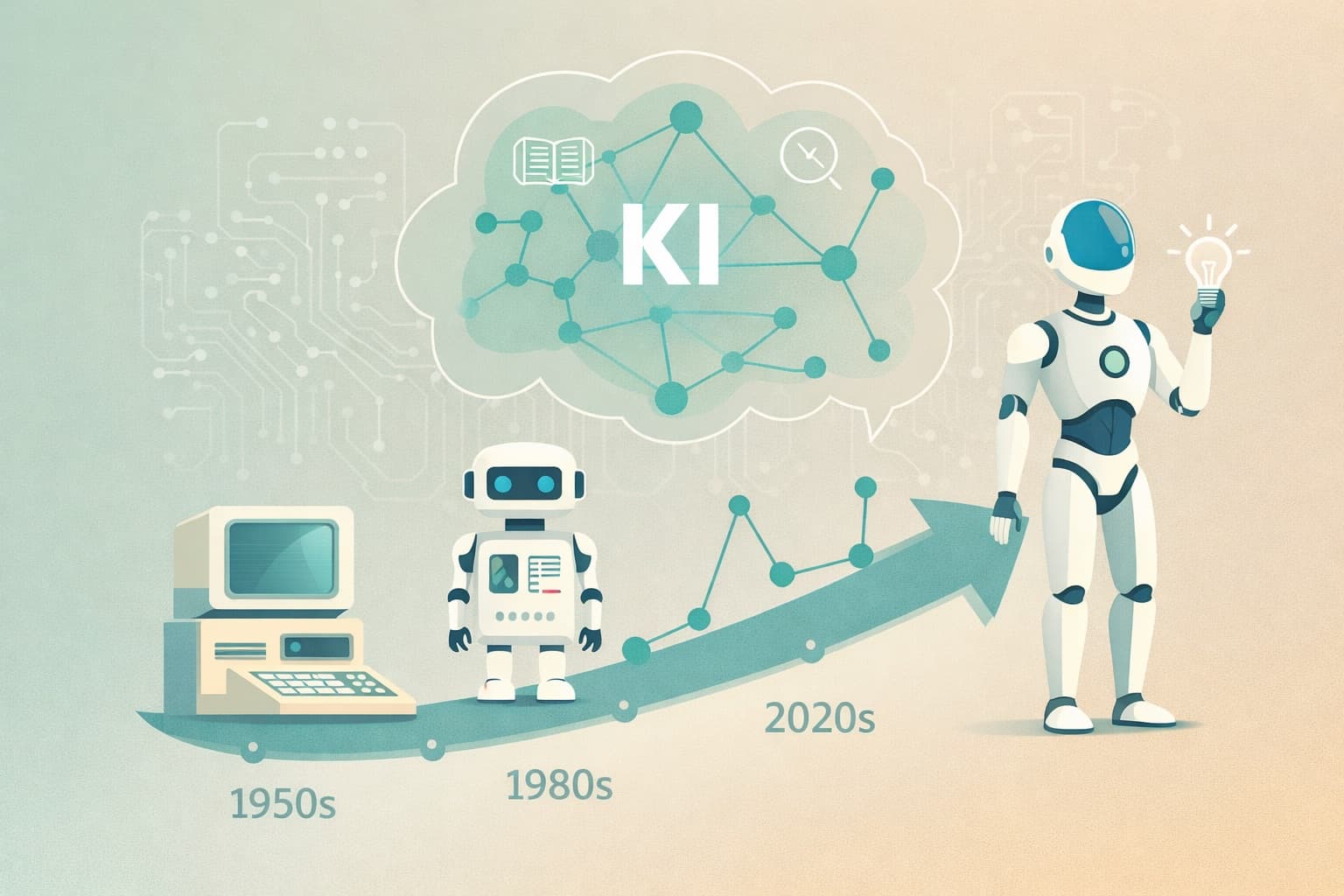
You might wonder: “If all of this is so great, why is it only happening now?” The ideas behind AI are surprisingly old. As early as the 1950s, pioneers like Alan Turingwere pondering whether machines could think. But for decades, two crucial ingredients were missing — ingredients we now have in abundance.
First, sheer computing power. Early computers were simply too slow to perform the complex calculations AI requires within a reasonable time. Today, every modern smartphone has more processing power than the supercomputers that once filled entire halls.
Second, data. Thanks to the internet, AI now has access to vast amounts of data covering much of humanity's digitally available knowledge as training material. You could say: AI had the theoretical talent before, but only today does it have the library and the computing power to actually complete its studies. We are living through a moment in technology history comparable to the invention of the steam engine or the internet — a tool that will change everything.
Under the Hood: How Does a Machine Actually Learn?
When experts talk about “Machine Learning” or “Neural Networks,” it often sounds like complicated biology. In truth, the underlying principle is very human: trial and error.
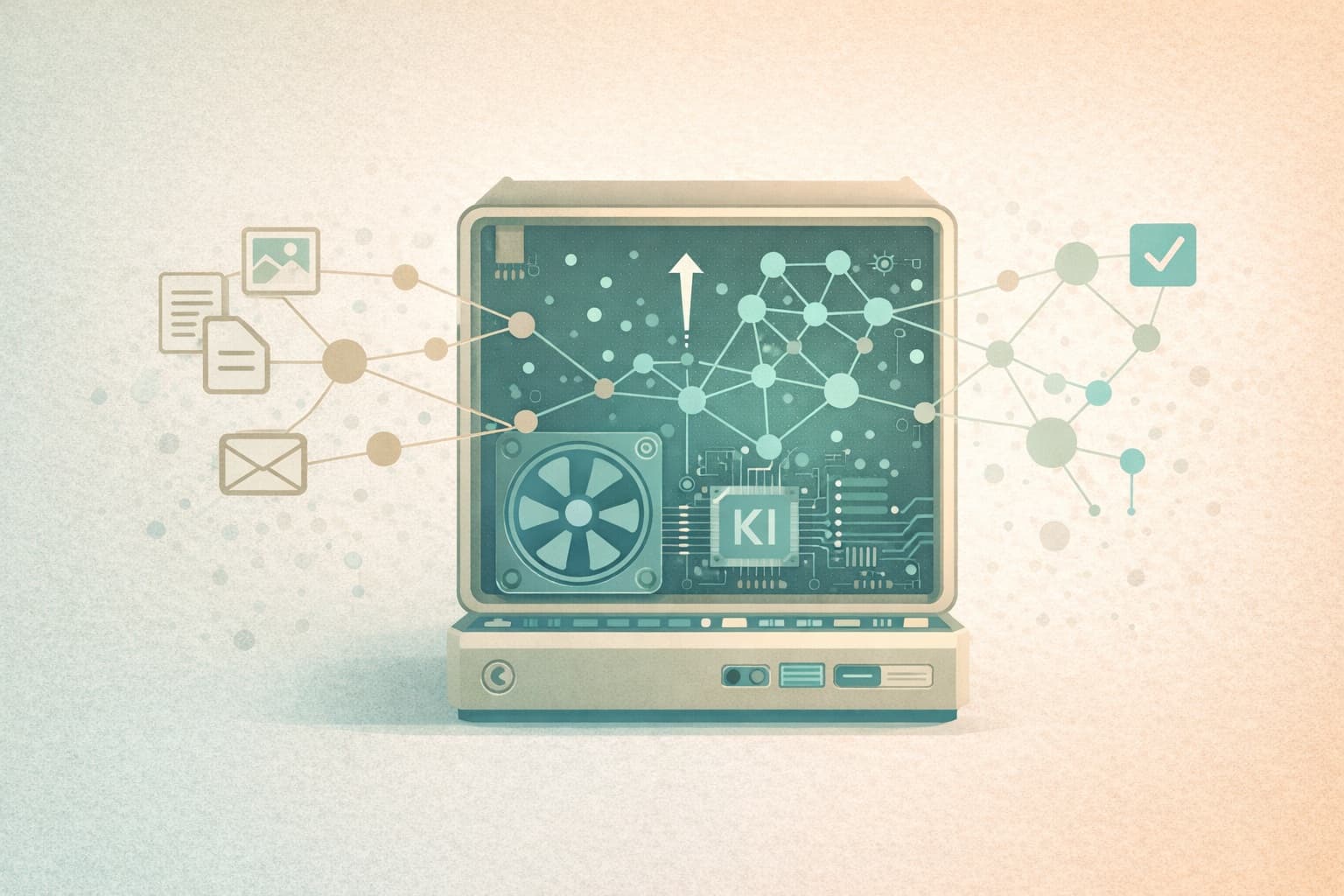
Imagine an AI is tasked with recognising handwritten numbers. At first, the machine guesses completely at random. When it identifies a “3” as an “8,” the system tells it: “Wrong — adjust your internal weights.” The AI then tweaks tiny levers inside itself and tries again.
This process is repeated not hundreds, but billions of times. Through this constant self-correction, structures emerge that resemble the neural pathways in our brains — hence the name “neural networks.” The AI essentially builds its own internal understanding of shapes, colours, and logical connections. When you use a tool today that converts your speech to text or sharpens a pixelated photo, you're seeing the result of billions of these tiny learning steps.
AI in Everyday Life: Where It Already Supports Us Today
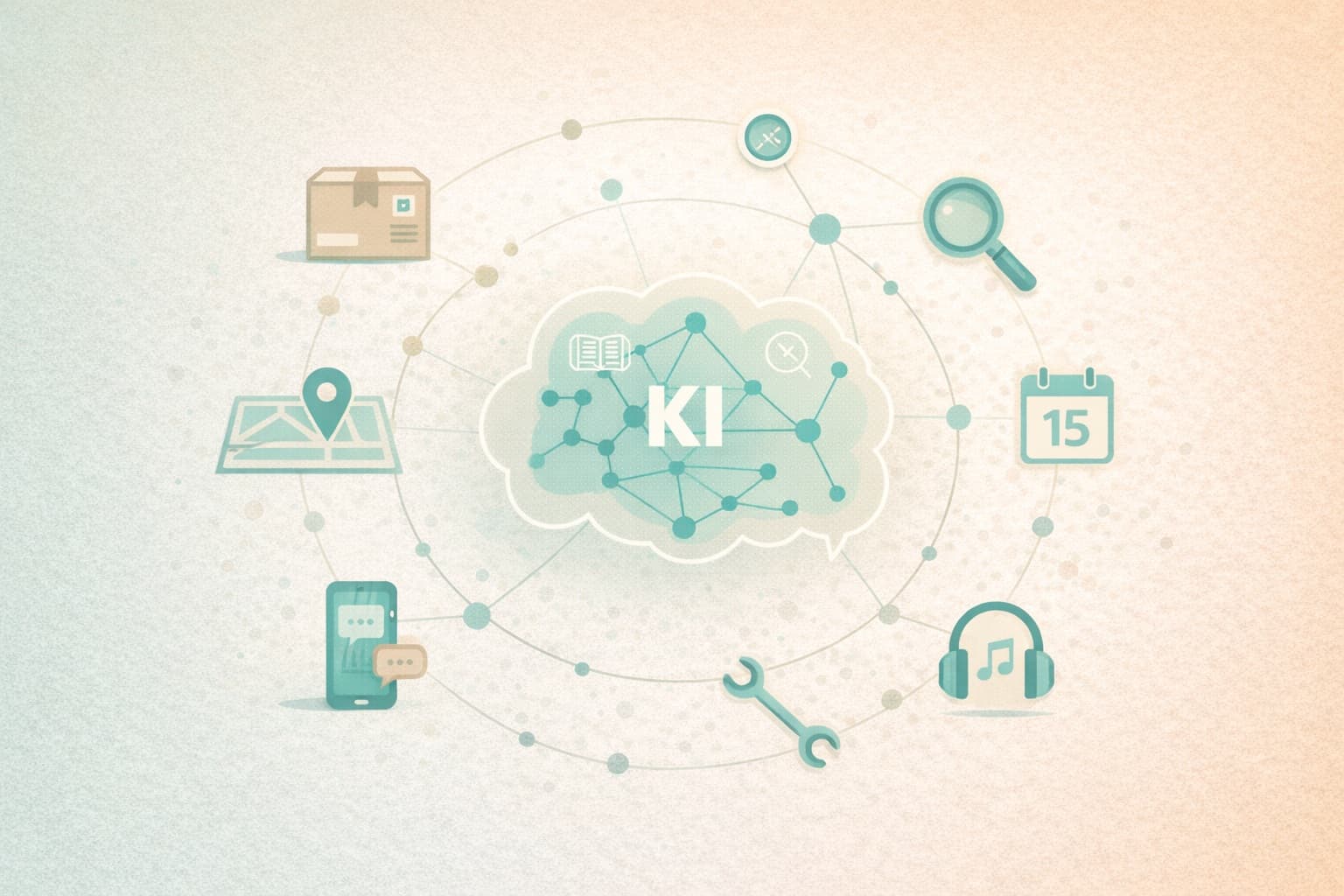
Many people think they've never used an AI. But the truth is: if you lead a modern life, this technology already accompanies you at every turn. Your sat-nav calculates the fastest route based on millions of other drivers. Your email inbox uses AI to filter out spam by detecting fraud patterns a conventional filter would miss.
More recently, tools have emerged that we can actively control. Programs like NotebookLMhelp us absorb hundreds of pages of text in seconds and summarise the key points. Creative tools let you generate images or even videos simply by describing them. These tools are no longer toys — they're becoming digital assistants that take over tedious routine tasks so we have more time for the things that truly matter.
Your Entry Point Into the World of AI
Artificial Intelligence may seem like a closed book at first glance. But as you've seen, behind the complicated terms often lies a principle we know from our own lives: learning through experience.
It's perfectly normal to feel uncertain in the face of such rapid development. The goal of KIneAhnungis to take that uncertainty away. We want to show you how to use these new tools at your own pace — without needing a computer science degree.
What would you like to discover next?
Or check out the Blog where we regularly share practical AI tips for everyday life.