The AI Journey: A Story of Visionaries, Winters, and “Move 37”
When you look at your smartphone today, you're holding the result of a decades-long marathon. The history of Artificial Intelligenceis not a sudden accident of technology but a story of people who saw things others considered impossible. It's a journey that began in dusty university basements and today culminates in a global race that fundamentally challenges our understanding of intelligence.
The Birth of a Vision and the German Contribution
It all began in the 1950s, when mathematicians like Alan Turing first made the bold claim that a machine could one day imitate human thought. Back then, it seemed like pure science fiction — computers were as large as entire living rooms and had less computing power than today's pocket calculators. But the seed was sown. At the legendary Dartmouth Conference in 1956, the term “Artificial Intelligence” was officially coined, and researchers were so euphoric they believed they could encode all of human intelligence within a single summer. No one suspected it would become a century-long project rather than a sprint.
What many forget today: world history was also written in Germany. While the USA often stood in the spotlight, pioneers like Jürgen Schmidhuber and Sepp Hochreiterwere working in Germany during the 80s and 90s on concepts without which many modern AI breakthroughs — including systems like ChatGPT — would hardly be conceivable. They developed so-called “Long Short-Term Memory” (LSTM), which for the first time allowed machines to remember information they had read a few sentences earlier — a kind of artificial short-term memory. Without this German pioneering work, AIs today couldn't write fluent text that makes sense beyond two words. They laid the foundation for the architecture that now astonishes the entire world.
The Long Years of Waiting: The “Ice Age” of AI
But the initial euphoria was followed by bitter disillusionment, which we now call the “AI Winters.” The visions were far ahead of their time. Computers were simply too slow, and the internet as we know it today — an infinite source of data — was still in its infancy. In the 70s and 80s, AI research was often ridiculed as a dead end. Funding was cut, and many researchers turned their backs on the field.
But a small group of the undeterred, including the Briton Geoffrey Hinton, held firm to the idea that we had to teach computers to learn like children — through trial and error. They didn't waver, even when the world around them had long since lost faith in intelligent machines. They knew: the engine was theoretically ready — it just lacked fuel. That fuel would come decades later in the form of gigantic amounts of data and exploding computing power.
From Checkmate to Digital Intuition: The Magical Move 37
A first major breakthrough came in 1997, when IBM's Deep Bluedefeated chess world champion Garry Kasparov. The world held its breath, but experts knew: this was “merely” brute computing force. The computer simply calculated millions of possibilities per second. It was clever, but not creative.
That changed dramatically in 2016, when Google subsidiary DeepMind pitted its program AlphaGo against the world champion in the board game Go. Go is considered one of the most complex games in the world, with an astronomical number of possible game states.
To put this in perspective:
| Seconds since the Big Bang | 1018 |
| Atoms in the universe | 1080 |
| Possible chess games | 10120 |
| Possible Go games (conservative) | 10170 |
| Estimated number of Go games | beyond 10360 |
You can't win Go through computation alone — you need a kind of “feel” for the game.
In the second match, something happened that made history: the AI played the so-called “Move 37.”It was a move that defied all established human wisdom. Commentators laughed at first, then fell into stunned silence. Everyone thought the move was a fatal mistake. But as the game progressed, it turned out that this one, completely unexpected move was the stroke of genius that secured the AI's victory. AlphaGo had found a new strategy that no human had taught it. The machine had begun to teach us.
The Democratisation of AI: The Big Bang of ChatGPT
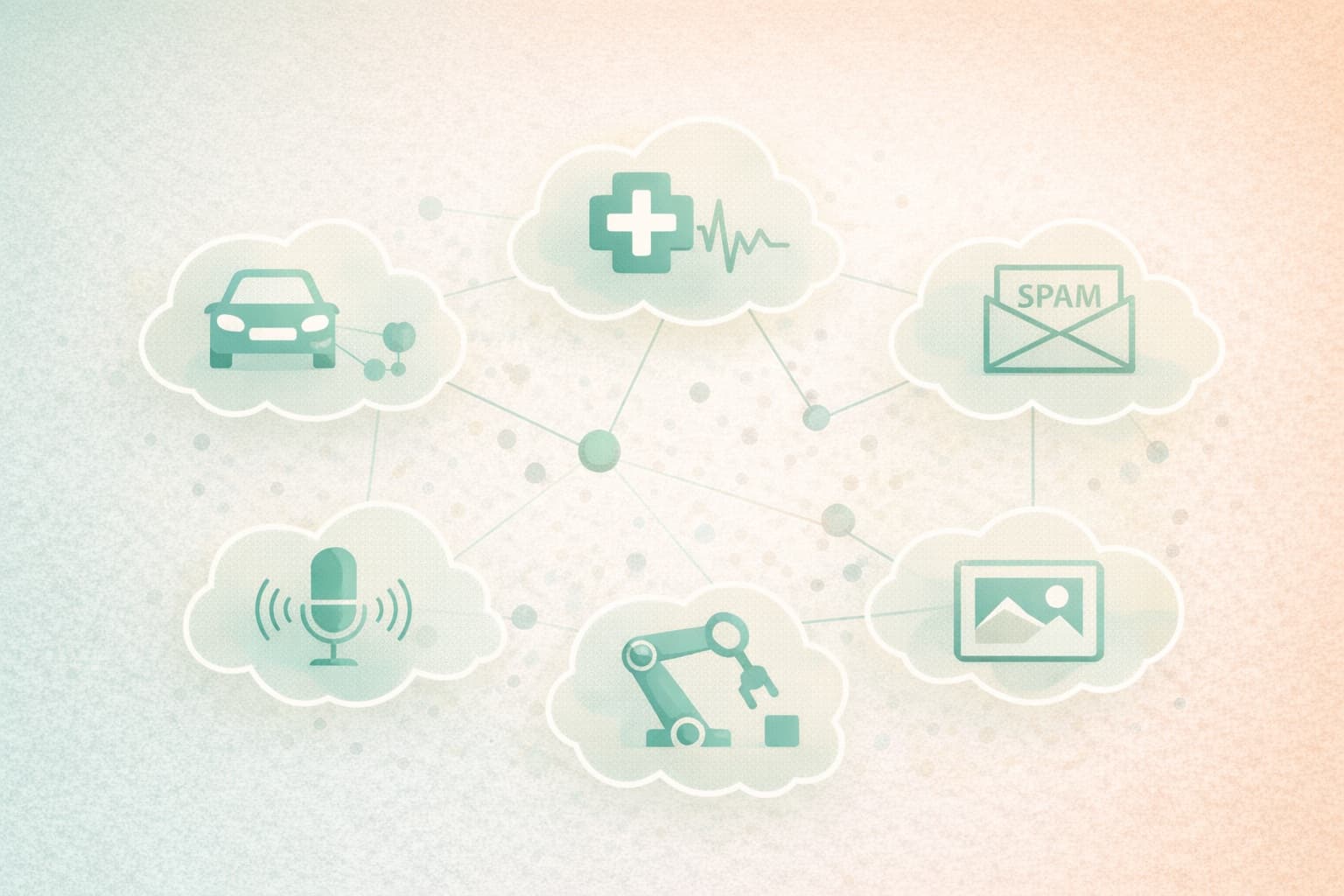
After AlphaGo's success, something happened that we now experience as the “great acceleration.” Thanks to the rapid spread of smartphones and social media, unimaginable amounts of text and images suddenly became available as training material. AI quietly moved into our daily lives: it sorted our spam, enhanced our holiday photos, and helped translate websites. But it remained largely invisible in the background.
That changed radically in November 2022. With the release of ChatGPT, AI became tangible overnight for anyone with an internet connection. It was no longer just an experiment for scientists. Suddenly, anyone could chat with a machine that wrote poems or explained complex subjects.
This “ChatGPT moment” triggered a global earthquake. Players like OpenAI (with Sam Altman), Microsoft, Google, and Apple began an exchange of blows that now produces new milestones almost weekly. What used to require years of research is now released in a software update on a Tuesday afternoon.
Your Place in History: Overcoming the Wall of Rejection
We are no longer in a phase of slow development; we are on an exponential curve. This means the changes we'll experience in the next year will probably be greater than everything we've seen in the last ten years. In such a fast-moving time, it's a completely natural instinct to go on the defensive. Many people around you will perhaps say: “I don't want to know about this, it's all moving too fast.” They build a wall of rejection to protect themselves from feeling overwhelmed.
The fact that you're reading these lines and engaging with the journey of AI shows that you've chosen not to stand in front of that wall. You now understand that this technology had a long, laborious childhood and we are only just experiencing the moment when it “grows up.” This understanding gives you enormous confidence. While others are still wondering whether AI is just a passing trend, you've already grasped the thread running through its development.
By knowing the history, you lose the awe before the supposed “miracle.” You now know that behind every “magical” moment like Move 37, there is hard work by people like Schmidhuber, Hinton, and Turing. This knowledge is your superpower: it allows you to view upcoming innovations not with fear, but with curiosity. You're not a passenger sitting helplessly on a train — you're someone who knows the tracks and understands why the train is accelerating so dramatically. Use this knowledge advantage, practise with the tools, and stay on the ball. Those who know history can shape the future.
What would you like to discover next?
Or check out the Blog where we regularly share practical AI tips for everyday life.